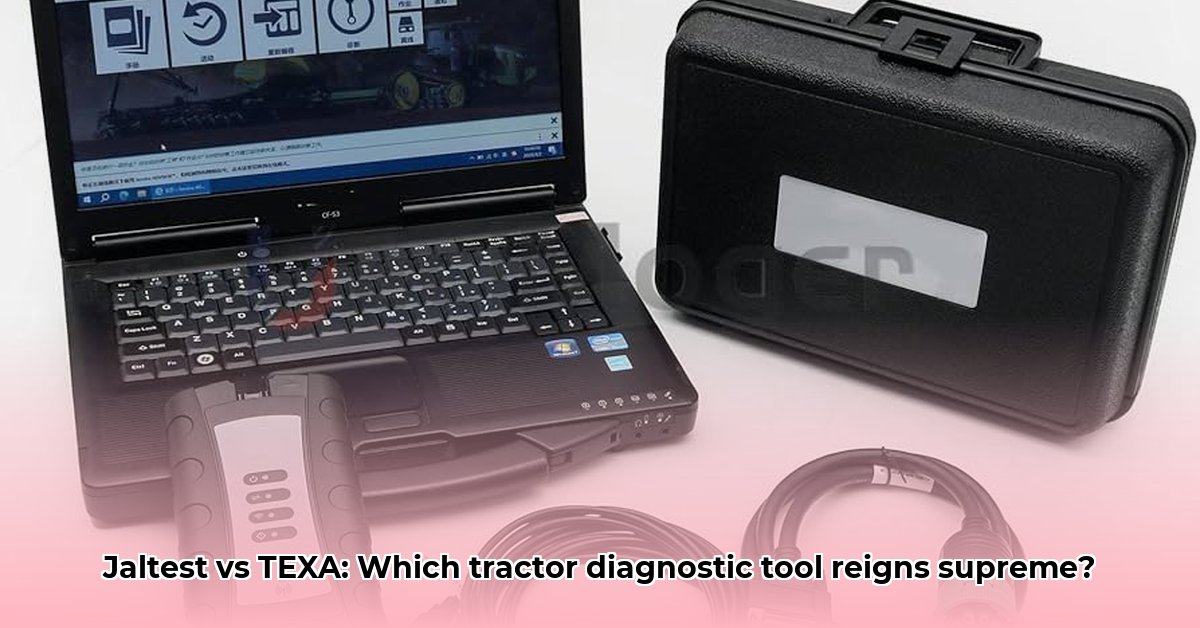
Keeping your farm running smoothly requires minimizing downtime. A reliable tractor diagnostic tool is crucial for quickly identifying and resolving mechanical issues. This article compares two leading diagnostic systems, Jaltest and TEXA, to help you select the best option for your operation. We'll examine their capabilities, highlight key differences, and discuss crucial considerations such as software updates, data security, and farm management system (FMS) integration. For additional tractor resources, see this helpful diagram.
Feature Comparison: Jaltest vs. TEXA
Both Jaltest and TEXA offer comprehensive diagnostics for tractors and other agricultural machinery. However, their strengths and approaches differ significantly. TEXA provides broader vehicle coverage, encompassing cars and trucks alongside tractors, making it attractive for farmers with diverse fleets. Jaltest, conversely, specializes in agricultural equipment, focusing its expertise on tractors and related machinery.
Here's a comparison of key features, based on available information:
| Feature | Jaltest (e.g., Triad DS) | TEXA (example model) | Notes |
|---|---|---|---|
| Real-time Data Monitoring | Yes | Yes | Standard feature in both systems. |
| Error Code Diagnosis | Yes | Yes | Essential function of both tools. |
| Scheduled Maintenance Resets | Yes | Yes | Both offer this functionality. |
| DPF Regeneration | Specific model and capability verification required | Frequently advertised; model-specific verification needed | Requires further investigation to confirm capabilities across all models. |
| Injector Calibration/Programming | Specific model and capability verification required | Frequently advertised; model-specific verification needed | Further investigation is needed to confirm capabilities and compatibility. |
| PTO Configuration | Specific model and capability verification required | Frequently advertised; model-specific verification needed | Requires further investigation to confirm across all models and configurations. |
| User-Friendliness | User reviews vary; vendor claims ease of use | User experiences vary; vendor claims ease of use | Actual user experience may differ significantly. |
Note: The lack of readily available, detailed specifications for certain functionalities in both systems makes a thorough comparison challenging. Further research is required to determine the full extent of their capabilities across various tractor makes and models.
Beyond the Specifications: Real-World Performance
While both vendors advertise user-friendly interfaces and comprehensive diagnostic capabilities, independent comparative testing to assess diagnostic speed, accuracy, and overall reliability is currently lacking. This makes it difficult to declare a clear winner. The available information is largely based on manufacturer claims, which needs to be independently validated through rigorous testing.
Farm Management System (FMS) Integration: A Critical Factor
Seamless integration with your farm management system (FMS) is crucial for modern, data-driven agriculture. This integration allows for predictive maintenance, optimized resource allocation, and a holistic view of farm performance. Currently, detailed information on FMS compatibility for both Jaltest and TEXA is limited, representing a significant gap in available information. Further research is urgently needed to assess the extent and effectiveness of this integration.
Choosing the Right Tool: Key Considerations for Farmers
The selection of either Jaltest or TEXA depends heavily on your specific farming operation and priorities. However, several factors should be carefully considered:
- Software Updates: Regular software updates are essential for maintaining accuracy and compatibility. Investigate the frequency and nature of updates offered by each vendor.
- Cloud Connectivity and Data Security: Data security is paramount. Investigate the security measures implemented by each vendor to ensure the protection of your sensitive farm data.
- Cost: Compare the initial investment, licensing fees, and ongoing maintenance costs.
The absence of thorough, independent testing and detailed information on FMS integration currently hinders a definitive recommendation. It is strongly recommended that potential buyers seek out peer reviews and real-world user experiences to supplement the information presented in this article.
Actionable Steps: Integrating Diagnostic Data with FMS
Successfully integrating diagnostic data into your FMS requires a structured approach:
- Assess Compatibility: Verify compatibility between your tractors, diagnostic tool, and FMS.
- Determine Data Transfer Method: Choose the most efficient data transfer method (manual, automated upload, or direct connection).
- Address Data Format Conversion: Convert diagnostic data into your FMS's compatible format.
- Implement Data Validation: Ensure data accuracy through validation checks.
- Integrate with FMS Reporting: Leverage the data for improved analysis and decision-making.
- Provide User Training: Train staff on the integrated system’s effective use.
By carefully considering these steps and actively seeking out additional information, you can effectively integrate diagnostic data into your farm management practices, leading to improved efficiency and profitability.